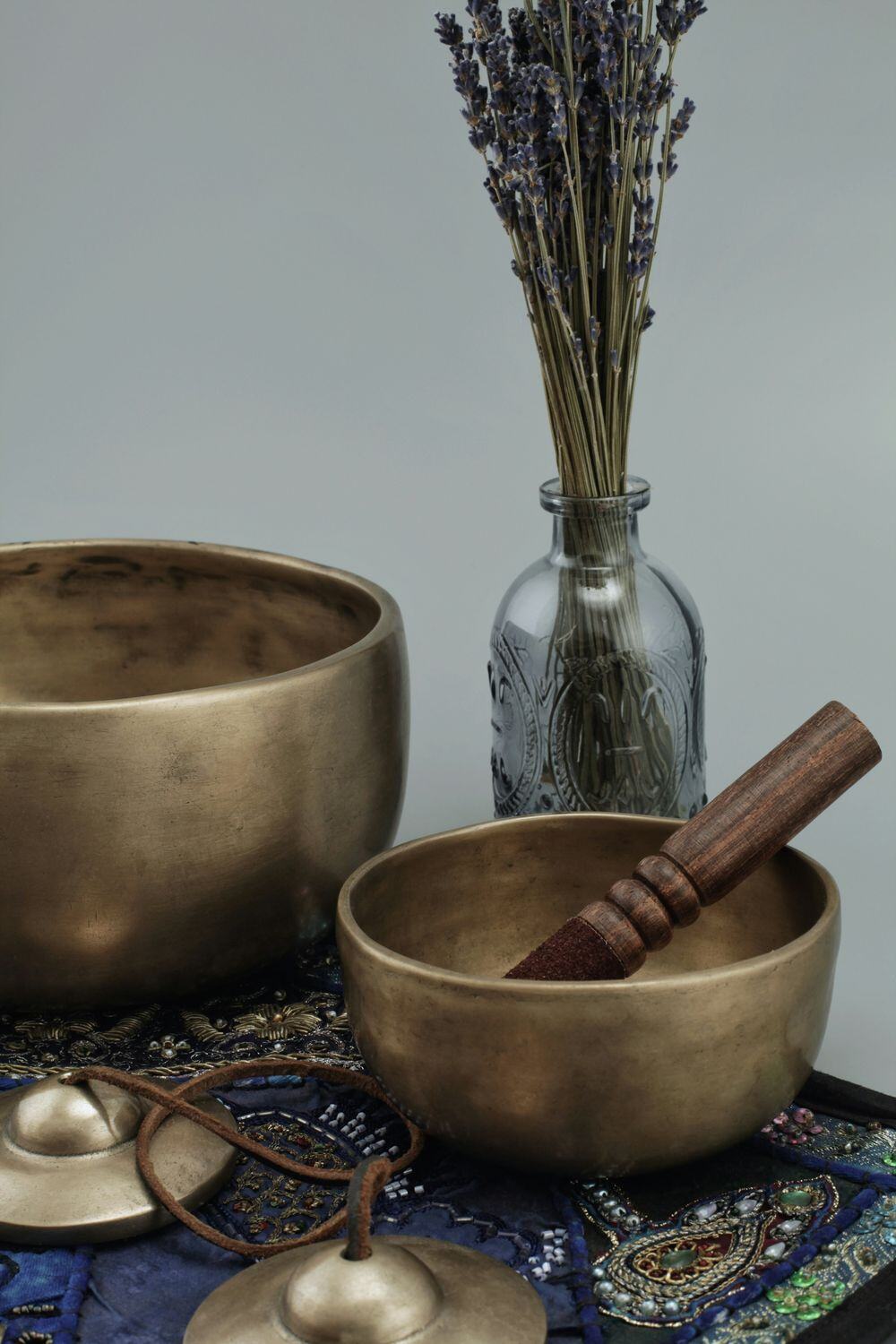
If you've never experienced a sound bath before, the idea can sound a little abstract: you lie down, someone plays a set of bowls or gongs, and somehow you leave feeling calmer. What's actually happening is more grounded than it sounds, and understanding the basics makes the first session much less intimidating.
The Idea Behind Sound Therapy
Sound therapy uses the vibration and tone of instruments — most commonly Tibetan singing bowls, crystal bowls, gongs, and tuning forks — to help the body and mind shift out of a stressed, alert state and into a more relaxed one. Instead of focusing on doing a pose or following an instruction, you mostly just lie down, close your eyes, and listen. The sound gives your attention somewhere calm to rest, which is often harder to do with silence alone.
What Actually Happens in a Session
A typical session starts with a few minutes of settling in — some gentle breathing cues, getting comfortable on a mat with a blanket or bolster. The practitioner then plays a sequence of bowls or instruments around or near you, usually starting slow and building in layers. Many people notice their breathing naturally slows down within the first few minutes. Some people fall asleep. That's normal, and it's often a sign the body has relaxed enough to let go.
What It's Commonly Used For
People typically come to sound therapy for a mix of reasons — general stress, trouble winding down before sleep, feeling mentally overstimulated, or simply wanting a form of rest that doesn't require effort. It's not a replacement for medical treatment, but as a relaxation practice, many people find it easier to stay consistent with than seated meditation, since there's less pressure to "do it right."
Sound Therapy and Yoga, Together
Sound therapy pairs naturally with yoga because both practices work with breath and nervous-system state. A short, gentle yoga sequence followed by a sound bath tends to deepen the relaxation further — the movement helps release physical tension first, and the sound session gives the mind something calm to settle into afterward.
What to Expect at Your First Session
Wear comfortable clothing, bring a light layer since body temperature can drop while lying still, and don't worry about "doing" anything — sound therapy is one of the few wellness practices where the least effort is genuinely the right amount.
Curious to try a session?
Swarkosh runs private sound therapy sessions and periodic group sound baths.
Explore Sound Therapy